Products
News
Whatsapp
Skype
Wechat
Choosing among China’s best UPS Power Supply manufacturers requires more than comparing prices or reading polished product pages. A reliable supplier should demonstrate practical experience with hospitals, data centers, factories, and telecommunications sites. It should explain battery chemistry, inverter efficiency, bypass design, thermal control, and maintenance access in clear language. Real factory evidence matters. Look for load-testing records, traceable quality procedures, service coverage, and product certifications relevant to the destination market.
Dr. David C. Dugan, a recognized power-quality specialist, has stated, “Power quality is a compatibility problem between the source and the equipment.” His observation remains highly relevant when evaluating Chinese UPS manufacturers. A strong supplier does not merely sell backup capacity. It studies voltage instability, harmonic distortion, generator interaction, runtime expectations, and local operating conditions. Ask for measured efficiency curves, transfer-time data, battery-temperature limits, and protection details. Do not accept vague claims.
The best choice may not be the largest factory. It may be the manufacturer that documents weaknesses honestly and responds quickly during testing. That distinction is easy to miss. A supplier with transparent limitations can be more dependable than one promising perfect performance. Buyers should also inspect firmware support, spare-part availability, warranty terms, and technician training. A factory visit can reveal details that brochures hide, including cable management, assembly discipline, and test-bench capacity. Still, one visit cannot prove long-term reliability. Independent verification remains necessary. This guide compares those practical factors, helping readers identify a China-based UPS partner with credible engineering, stable production, and support that continues after installation.
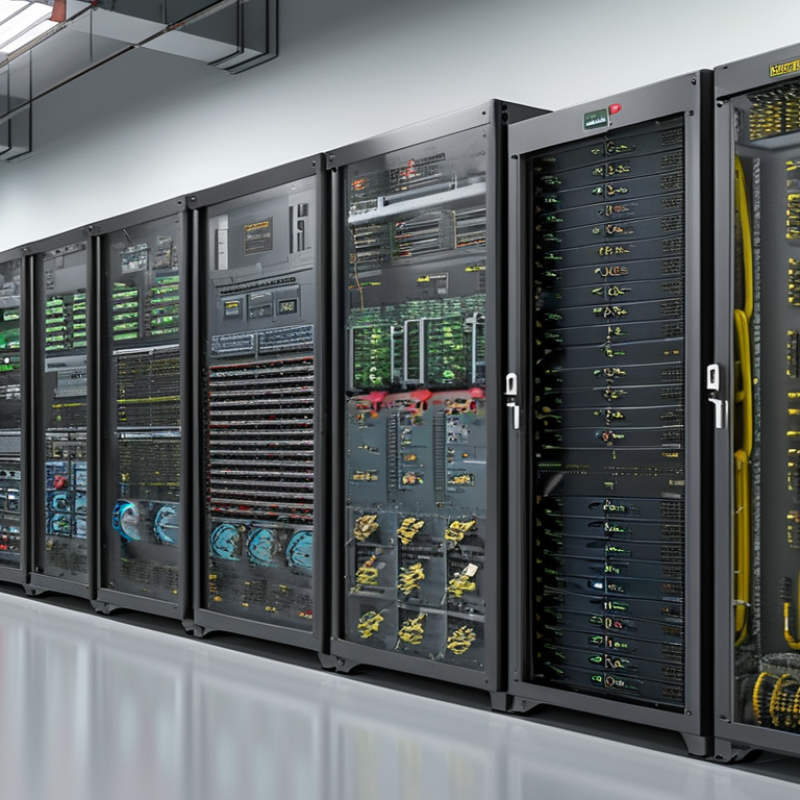
A UPS power supply is a device that protects electrical equipment when utility power fails or becomes unstable. It usually combines a charger, battery system, inverter, and automatic transfer switch. When voltage drops, the UPS can provide backup power within milliseconds. That brief interval protects servers, medical equipment, factory controls, and communication systems from sudden shutdowns.
Manufacturer choice matters because UPS performance depends on more than the nameplate capacity. A dependable manufacturer should explain battery life, overload limits, transfer time, cooling design, and maintenance procedures clearly. During a factory evaluation, buyers should inspect testing records, wiring quality, alarm functions, and burn-in procedures. Ask for measured results, not attractive claims. That detail matters.
China has many UPS power supply manufacturers, but quality can vary between production lines. Check whether the company designs its own control systems or only assembles imported parts. Review certifications, traceable component records, warranty terms, and local service capability. A useful test includes repeated power cuts, heavy-load operation, and battery discharge checks. Not always. A low price may hide weaker capacitors, limited monitoring, or difficult replacement work. I have found that brochures often describe ideal conditions, while real sites contain dust, heat, and uneven loads. Buyers should question both sides, including their own assumptions. A technically strong manufacturer will discuss failure risks openly and provide practical installation guidance.

China Best UPS Power Supply Manufacturers?
China’s UPS power supply industry is organized as a layered manufacturing network. Component producers supply batteries, power semiconductors, capacitors, transformers, and cooling systems. Specialized factories then assemble UPS cabinets for data centers, hospitals, factories, and telecommunications sites. Many manufacturers combine OEM production with engineering services, allowing customers to adjust voltage, battery autonomy, cabinet size, and monitoring functions.
The market is increasingly shaped by data center growth. According to the International Energy Agency, global data center electricity demand could more than double by 2026. This pressure makes stable backup power essential. The Uptime Institute’s Global Data Center Survey identifies power problems as a leading cause of reported outages. Chinese manufacturers respond through modular UPS designs, parallel operation, lithium battery options, and remote monitoring. Factory testing commonly includes load simulation, thermal checks, insulation testing, and battery discharge trials.
Quality differs between factories. It does.
A reliable supplier usually separates design, assembly, testing, and after-sales teams. Buyers should request test records, efficiency curves, protection settings, and documented component specifications. ISO 9001 certification supports process control, but it does not prove every product performs equally. That distinction is often overlooked. Market reports from Grand View Research also indicate continued global UPS growth, driven by data centers, industrial automation, and power-sensitive equipment. However, published forecasts vary by research method, so procurement decisions should include site testing and independent verification.
China’s UPS manufacturing industry is commonly organized by power capacity and system architecture. Small single-phase units typically serve offices and network equipment, while medium three-phase systems support factories and commercial facilities. Large centralized and modular systems are designed for data centers, industrial sites, and other critical infrastructure. The capacity bands shown are common commercial ratings, not company or brand market shares.
Choosing the best UPS power supply starts with the load, not the brochure. Buyers should compare double-conversion, line-interactive, and standby technologies against power quality, transfer time, and maintenance needs. Double-conversion systems suit servers, medical equipment, and industrial controls because they continuously regulate voltage and frequency. Line-interactive units may fit offices with stable grids. Small differences matter.
Compare kVA and kW ratings carefully. A 100 kVA UPS with a 0.8 power factor delivers less usable power than a unit rated at 1.0. Check starting currents, future expansion, battery runtime, recharge time, efficiency, and short-circuit protection. N+1 redundancy can protect critical loads, while parallel modular systems simplify capacity growth. The U.S. Department of Energy and Lawrence Berkeley National Laboratory estimated that American data centers used 176 TWh of electricity in 2023, with demand potentially reaching 325–580 TWh by 2028. Efficient UPS operation is becoming a practical cost issue, not merely an engineering preference.
Tips: Request an IEC 62040-3 performance classification, verified efficiency curves, acoustic data, and battery-life assumptions. Test the UPS at realistic loads, including low-load operation. A common buying mistake is trusting maximum runtime figures. They often assume new batteries, ideal temperatures, and no future capacity margin. That deserves a second look.
| UPS Technology | Typical Power Rating | Power Protection Method | Typical Efficiency | Transfer Time | Battery Options | Recommended Applications | Key Advantages | Important Limitations |
|---|---|---|---|---|---|---|---|---|
| Offline / Standby UPS | 300 VA–2 kVA | Utility power normally feeds the load; an inverter starts when the input fails. | Approximately 95%–98% in normal operation | Typically 2–10 ms | Sealed lead-acid or lithium-ion batteries, depending on model | Home computers, point-of-sale terminals, small network devices, and basic office equipment | Low purchase cost, compact size, and low operating losses | Does not continuously regulate voltage or isolate the load from many power disturbances; not ideal for sensitive servers |
| Line-Interactive UPS | 500 VA–5 kVA | Automatic voltage regulation corrects moderate sags and surges without using battery power. | Approximately 95%–98% | Typically 2–8 ms | Replaceable sealed lead-acid batteries; lithium-ion options are also available | Small offices, network cabinets, telecommunications equipment, and workstations | Better voltage regulation than standby units and longer battery availability during brownouts | Usually has a short transfer interval and may not provide the same waveform quality or isolation as online designs |
| Online Double-Conversion UPS | 1 kVA–1,000 kVA or higher in modular systems | AC power is continuously converted to DC and then regenerated as stable AC. | Approximately 90%–97%; high-efficiency modes can exceed 98% under suitable conditions | Zero transfer time for critical loads | Valve-regulated lead-acid, lithium-ion, or other approved battery systems | Data centers, medical equipment, industrial control systems, financial systems, and critical servers | Strong voltage and frequency regulation, electrical isolation, zero-transfer operation, and clean output power | Higher capital cost, more heat generation, and greater maintenance requirements than standby designs |
| Modular Online UPS | 10 kW–2 MW, depending on system architecture | Multiple parallel power modules share the load and can be added or replaced as capacity changes. | Approximately 94%–99% depending on load level and operating mode | Zero transfer time for protected loads | Centralized or distributed battery cabinets using lead-acid or lithium-ion batteries | Growing data centers, enterprise facilities, cloud infrastructure, and high-availability operations | Scalable capacity, N+1 redundancy, easier serviceability, and improved space utilization | Requires careful module coordination, bypass planning, thermal management, and system-level design |
| Three-Phase Online UPS | 10 kVA–5 MVA or higher in parallel configurations | Three-phase rectifier and inverter continuously condition power for large critical loads. | Approximately 94%–99% | Zero transfer time for critical loads | External battery cabinets, battery rooms, or integrated lithium-ion systems | Industrial plants, large data centers, hospitals, transportation systems, and commercial buildings | Supports high power levels, balanced distribution, scalable redundancy, and efficient facility integration | Higher installation complexity; requires qualified electrical engineering, protection coordination, and ventilation planning |
| Low-Frequency Transformer-Based UPS | 10 kVA–1,000 kVA or higher | Uses a transformer for galvanic isolation, voltage conversion, and improved tolerance of certain load conditions. | Approximately 90%–96% | Zero transfer time when configured as an online system | External lead-acid or lithium-ion battery banks | Industrial environments, motor-driven loads, harsh electrical networks, and systems requiring isolation | Strong overload capability, electrical isolation, and compatibility with demanding non-linear loads | Heavier, larger, and often less efficient than transformerless alternatives |
| Transformerless Online UPS | 10 kVA–1,000 kVA or higher | High-frequency power conversion provides regulated output without a large line-frequency transformer. | Approximately 94%–99% | Zero transfer time for critical loads | External or integrated lead-acid and lithium-ion battery systems | Data centers, IT rooms, telecommunications facilities, and space-constrained commercial sites | Lower weight, smaller footprint, high efficiency, and reduced cooling demand | Requires careful evaluation of short-circuit performance, grounding, bypass design, and load compatibility |
Buyer comparison should include rated kVA and kW, power factor, input and output voltage, phase configuration, battery runtime, recharge time, overload capacity, short-circuit protection, bypass capability, efficiency at the expected load, communications, operating temperature, service support, and compliance with applicable standards such as IEC 62040 and UL 1778 where relevant.
Assessing a China-based UPS manufacturer requires more than comparing prices. Ask for test records covering overload, short-circuit protection, battery charging, and thermal performance. A serious supplier should explain its design choices clearly. Engineers should also provide product specifications, factory inspection details, and traceable component records.
During a factory audit, inspect the assembly line, burn-in area, and final inspection station. Look for calibrated instruments and recorded test results. Request samples from different production batches. Measure output voltage, transfer time, noise, and battery autonomy under realistic loads. A UPS may perform well in a showroom but struggle in a hot server room. That matters.
Check whether the manufacturer follows recognized safety and quality requirements for your target market. Review certification scope carefully, because one certified model does not cover every product. Ask about firmware updates, replacement batteries, spare parts, and technical response times. Service quality often appears after installation, not during negotiation. A polished factory tour can still hide weak documentation. I have seen impressive prototypes fail basic consistency checks. Independent testing is therefore worth the extra cost, although smaller buyers may find it difficult. Require a written acceptance plan with measurable limits, delivery records, and corrective actions. Keep communication precise. Vague promises create expensive misunderstandings.
Selecting a Chinese UPS supplier should begin with your actual electrical profile, not a sales brochure.
Record load size, power factor, runtime, voltage, phase, bypass requirements, and expansion plans. Leave headroom. MarketsandMarkets’ 2024 UPS Market report projects growth from USD 12.2 billion in 2023 to USD 16.7 billion by 2028. That growth brings more suppliers, but not equal manufacturing depth.
Request product drawings, efficiency curves, battery specifications, warranty terms, and recent test records. Check compliance with IEC 62040 and the destination market’s requirements. Ask whether testing covers overload, temperature rise, transfer time, and battery autonomy. Numbers matter. A factory audit should examine incoming inspection, aging tests, spare-parts storage, and technician training. A video tour is useful, but it can miss weak procedures.
Use a sample unit before signing a volume contract. Run a factory acceptance test with witnessed measurements and written limits. Confirm serial-number traceability and software update control. Uptime Institute’s 2024 Annual Outage Analysis reported that 54% of serious outages cost more than USD 100,000, making service response commercially important. Ask for named support contacts, response times, local spare parts, and escalation rules. Compare total cost, including batteries, freight, commissioning, maintenance, and replacement intervals. The cheapest quotation may become expensive after one neglected alarm. I would still keep a risk register; even a careful audit cannot predict every field failure.